For anyone who’s ever met me, you know my dog Koda is my entire world. And if you’ve gotten to know my family, you know we are dog people. With six dogs, and four people the dogs outnumber us.
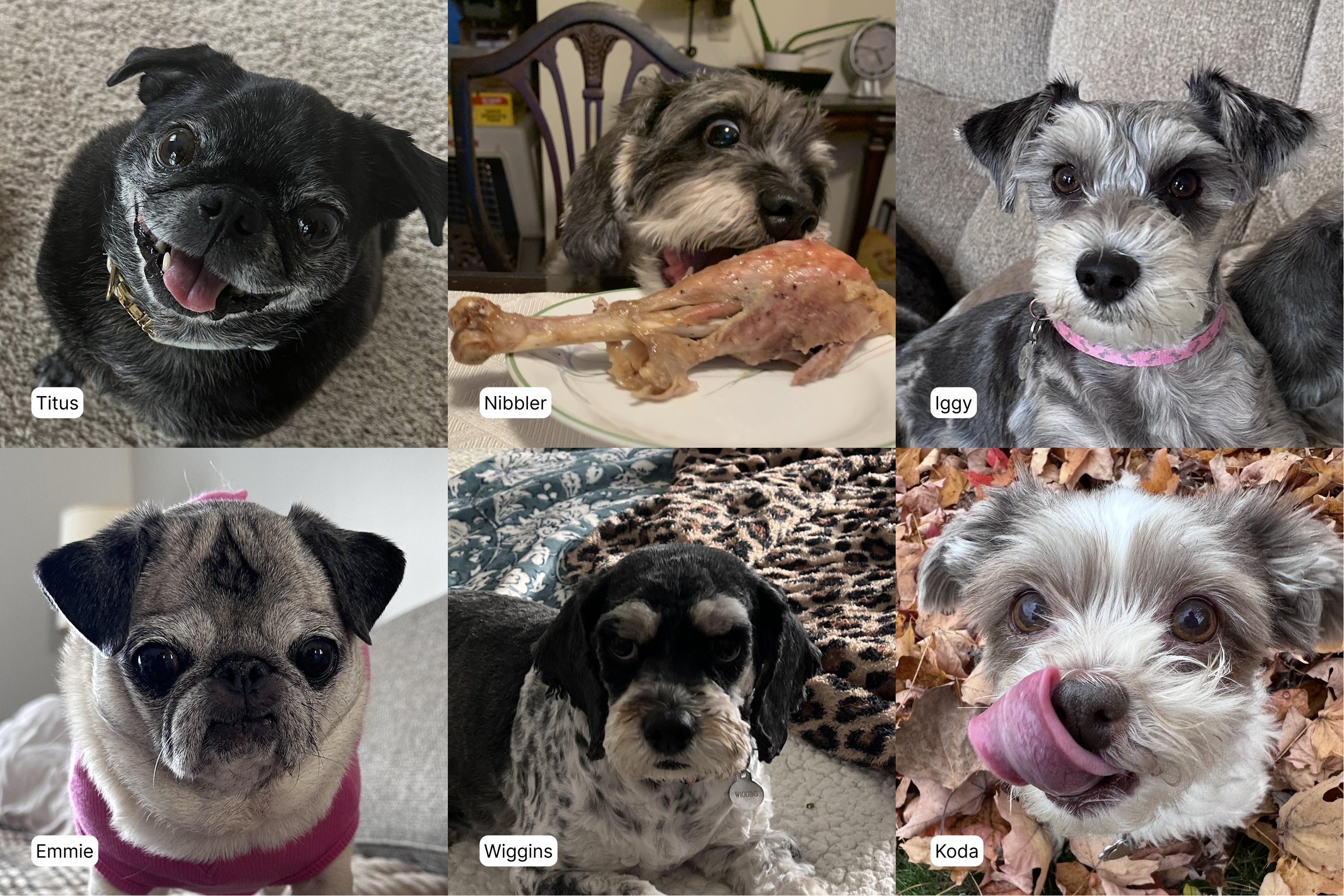
Trust me, it’s impossible to get a photo of them together.
The dogs outnumber us.
That reality shapes more decisions in my house than I ever expected. Every decision I make from stair heights, to fence railing widths is run through the same mental filter:
Is this usable for them?
The best thing a human can give their dog is a yard. That has been my goal with every house I have purchased; give Koda a yard that is safe. What starts out as a realtor search ends as a UX problem, its thinking about her experience, which is always a lesson in empathy and planning. What I do normally for work, becomes a real life reality UX Problem to solve.
This house was different, living closer to my family ensures that there will be 4 legged visitors (24 legs if you’re keeping track at home) at a moments notice. Up to six four legged friends becomes a system of users, with edge cases - it becomes a mission where a failure point could be costly, a fence stops being a fence, it becomes your entire security.
I wanted to ensure that when family and friends visit that there isn’t that awkward moment at the gate - nobody trying to heave their robust-bellied pug over a overly tall fence (sorry Titus!). Or the potential for a wiggly puppy to have a jailbreak moment if a fence gate opens the wrong way for a millisecond. Of couse we also have to consider our older arthritic friends, who cannot step or jump too high. A place where if they needed to leave their dogs for a time, they would feel the yard is secure, safe and free of worries.
A jailbreak is my nightmare. I live on a country road. People drive fast. Getting dogs into a safe space quickly isn’t optional — it’s essential.
This house didn’t come with a fence, but it did come with a fantastic yard. My first mission was to build a fence and to consider those moments; who and how it would be used. Not only to consider Koda and what would keep her safe, but to consider my family as use cases for my design. So while I was building the fence, I kept thinking about that moment, not the moment I would use it, but the moment my family would. Someone whose hands are full or has a couple dogs. Someone managing an excited dog who just wants to play with their buddy. Something special just for them.
Because my deep fear of jailbreaks and the busy road I am on, it was important to have a entrance that allowed the door to only be opened from the outside. That would swing back when not in use, retracting on its own. That’s when the idea of a special hidden dog door entry started forming.
I built a secondary gate. It’s subtle and integrated and most importantly not obvious at first glance. It can open easily with one hand, incase you’re juggling two dogs. We managed to position it just so those in on the secret can naturally approach it without others knowing its there.
It’s a small thing, but small things are often where experience lives.
This experience taught me a very valuable lesson, good design doesn’t have to be loud or call attention to itself. When something is truly intuitive, people don’t stop to admire it, they just use it as intended, smoothly, without any stress or hesitation. That shoudl always be the goal.
While I was building, my human side of the family were valuable parts of every step. From holding boards, to painting, helping measure, stepping back with me to look at sight lines and flow. Measuring their dogs rotund barrel tummies and shoulders, to ensure the entry was big enough (again, sorry Titus), to ensure the smallest dog wouldn’t fit through the railings. Koda and her friends where of course helpers too, constantly testing and showing me how the space would be used versus how I assumed it would be used.
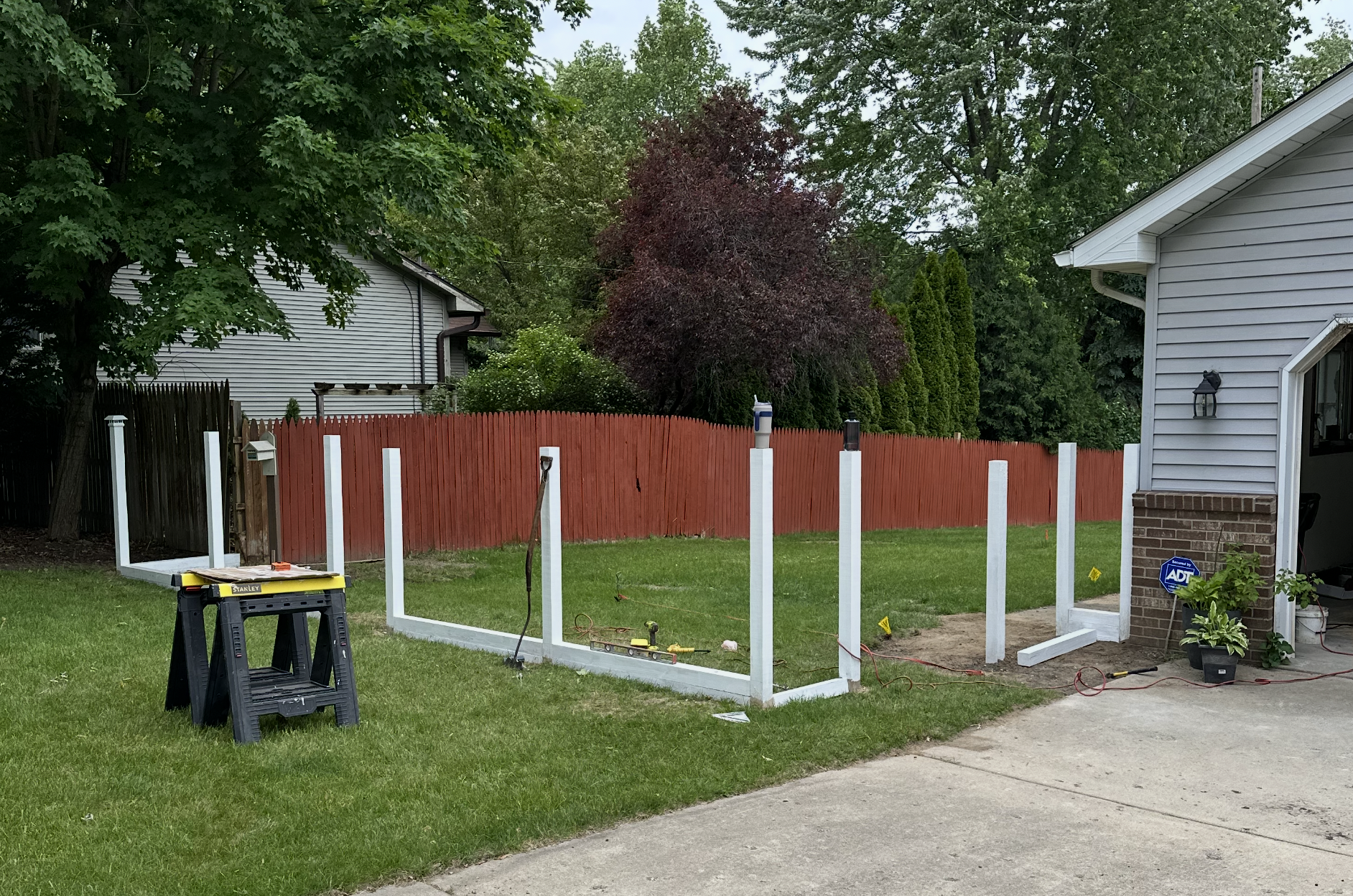
Building is a lot like a wireframing exercise.
Dogs are honest and the make honest subjects. Watching Koda, Titus, Emmie, Wiggins, Nibbler and Iggy explore the yard, told me more then any assumption ever could, which taught me another lesson, observation beats assumption every time.
What I ended up with isn’t just a dog fence. It’s an experience designed special for our lives, something custom for her and for her friends.
And maybe that’s why I love renovation so much. It forces you step outside yourself and your assumptions to not only see but think about people (and dogs) in an entirely different, and real way. Not through a spreadsheet describing a personas or a hypothetical user journey-actual movement, weight, sound, hesitation, and habit.
In my family, the dogs will probably always outnumber us. While the yard is half finished (spoiler alert - another blog is coming on this!), the yard is already busier, happier, and a lot easier on our visitors. Every time someone guides their pup in, I’m reminded the best design can go unnoticed, which to me in its own quiet way means its working.
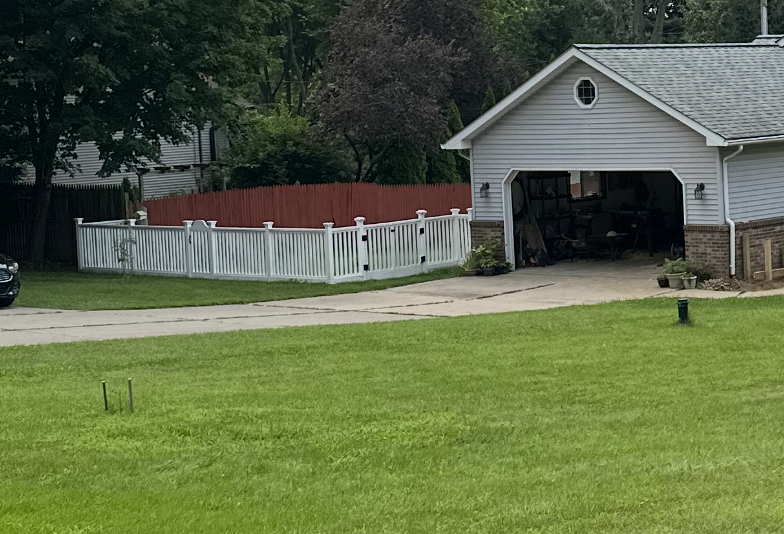
At least the front is finished!